Taxes 101
Taxes 101
If taxes feel overwhelming, start here.
Staying organized is one of the simplest ways to reduce tax stress. Keeping documents, records, and references in one place makes filing easier and helps avoid missed information later.



Taxes 101: Structural Tax Awareness
Tax management is a core component of financial stability.
Taxes influence cash flow, investment returns, and long-term capital accumulation. Understanding basic tax structure reduces compliance risk and prevents unnecessary loss of capital.
Tax planning is not about chasing refunds. It is about controlled allocation and legal efficiency.
Core Tax Principles
Effective tax management begins with:
• Understanding taxable income categories
• Knowing applicable deduction and credit structures
• Maintaining accurate documentation
• Reviewing withholding and estimated payment obligations
Compliance reduces exposure. Planning improves efficiency.
Tax Strategy and Financial Structure
Tax decisions should align with:
• Income stability
• Business activity (if applicable)
• Investment strategy
• Retirement planning
• Cash flow forecasts
Poor tax planning disrupts liquidity.
Structured tax oversight protects it.
Risk Awareness
Tax law evolves. Errors in reporting or misinterpretation can create penalties, audits, or unexpected liabilities.
Regular review and professional consultation — when appropriate — strengthen structural compliance.
Taxes are not optional.
They are operational.
Implementation
This page connects to structured resources designed to support:
• Tax documentation control
• Deduction awareness
• Withholding review
• Long-term tax-efficient planning
Stability improves when tax exposure is monitored — not ignored.
Taxes 101 — Structure, Compliance, and Reality
An ethical, simple framework for understanding taxes without fear or confusion
Most tax content focuses on loopholes, avoidance, or last-minute panic.
This guide focuses on reality.
Taxes 101 is not about tricks, aggressive tactics, or “beating the system.” It’s about understanding how taxes actually work, why compliance matters, and how to structure your financial life so taxes stop being mysterious or stressful.
This guide treats taxes as a structural obligation, not a punishment.
What Makes This Different
Unlike most tax books and content, Taxes 101:
Does not promote avoidance schemes
Does not promise lower taxes through tricks
Does not use fear, urgency, or threats
Does not assume advanced knowledge
Instead, it focuses on:
Structure before filing
Understanding before optimization
Compliance before complexity
Reality over myths
The goal is clarity, not shortcuts.
What This Guide Helps You Do
Understand what taxes are and why they exist
See how income, timing, and structure affect taxes
Reduce surprises by planning calmly
Approach compliance without fear or confusion
Make informed decisions without crossing ethical lines
No loopholes.
No hacks.
No panic-driven advice.
Just a clear framework for dealing with taxes honestly and intelligently.
Who This Is For
This guide is for people who:
Feel overwhelmed or anxious about taxes
Want clarity instead of avoidance tactics
Prefer ethical, compliant decision-making
Value transparency, stability, and long-term thinking
If taxes have felt intimidating, unclear, or adversarial—this guide was written to make them understandable and manageable.
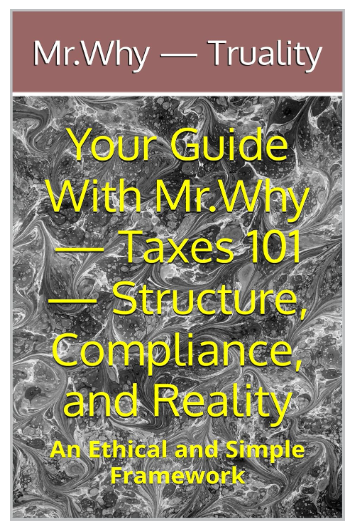
Available from Amazon/Kindle or directly from Truality.Finance by Mr.Why
Taxation Rules (Stability Framework)
1) Maintain Deduction Documentation
Accurate recordkeeping reduces tax reporting errors and supports legitimate deduction claims.
Track deductible categories such as:
• Medical expenses (subject to AGI thresholds)
• Qualified home office expenses
• Education-related expenses (when eligible)
Maintain organized documentation to substantiate claims in the event of review or audit.
Documentation protects compliance. Compliance protects stability.
2) Understand Marginal Tax Brackets
Tax brackets are marginal, not flat.
Only income above each threshold is taxed at the higher rate. Misunderstanding this can lead to incorrect withholding decisions or unnecessary avoidance of income increases.
Accurate bracket awareness supports:
• Withholding adjustments
• Estimated tax planning
• Strategic income timing
Refunds occur when tax payments exceed liability. They are not automatic without proper filing.
Precision prevents overpayment and underpayment.
3) Plan for Capital Gains Treatment
Capital gains taxation depends on holding period.
Assets held longer than one year may qualify for long-term capital gains rates, which are typically lower than short-term rates.
However, tax strategy should not override overall portfolio structure. Liquidity needs and allocation discipline remain primary.
Tax efficiency supports investing — it does not replace it.
4) Utilize Tax-Advantaged Retirement Accounts
Qualified retirement accounts may provide:
• Tax-deferred growth (Traditional accounts)
• Tax-free qualified withdrawals (Roth accounts)
• Contribution-based income reduction (when eligible)
For self-employed individuals, options such as Solo 401(k) or SEP IRA may provide higher contribution limits, subject to IRS rules.
Contribution decisions should align with income stability and cash flow needs.
5) Claim Eligible Credits Accurately
Tax credits reduce liability dollar-for-dollar when eligibility criteria are met.
Examples may include:
• Child Tax Credit
• Education credits
• Dependent-related credits
Eligibility for dependents requires meeting IRS-defined tests, including residency, support, and relationship criteria. Temporary housing or informal support alone may not qualify.
Accuracy is essential.
Overstating eligibility increases audit risk.
Practical tax strategies you can use:
Max Retirement Contributions: 401(k), IRA, or HSA reduce taxable income.
Tax-Loss Harvesting: Sell losing investments to offset gains.
Itemize Deductions: Mortgage interest, medical bills, or charitable donations.
Tax Credits: Child Tax Credit, Earned Income Credit, education credits.
Business Deductions: If self-employed—home office, mileage, supplies.
👉 Smart planning = less tax owed, more money kept.text here...

$105.00)- J.K. Lasser’s Your Income Tax 2026 Professional Edition: A high-level tax reference aimed at professionals or serious filers who want deep insight and planning tools.
$17.89)- Taxes For Dummies 2024 Edition: A beginner-friendly book to help you confidently file your taxes and understand basic filing rules and credits.
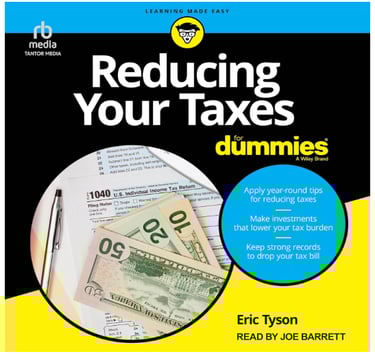
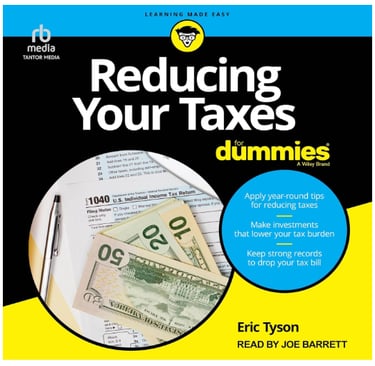
$20.25)- Reducing Your Taxes For Dummies: Friendly, approachable advice on how to reduce your tax burden via smart planning and use of tax-saving accounts.
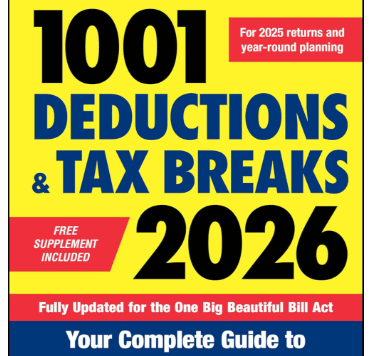
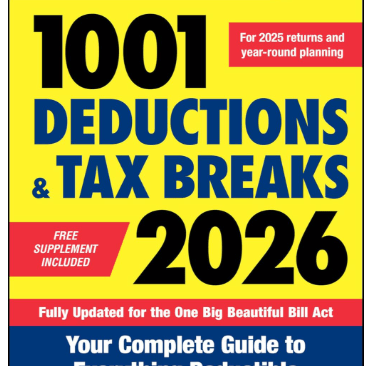
$25.00)- J.K. Lasser’s 1001 Deductions & Tax Breaks 2026: A detailed reference packed with legal deductions and tax-saving strategies for individuals and small business owners.
$26.95)- J.K. Lasser’s Your Income Tax 2026: The go-to guide for filing your personal federal income taxes with current code updates and tips to maximize deductions.
$31.99)- Small Business Taxes For Dummies: Tailored for small business owners – covers tax planning, deductions, bookkeeping needs and compliance issues.
“Mr. Why’s Thriving Thursday’s: Smart Amazon Finds to Simplify Taxes and Keep More of What You Earn”
Affiliate Disclaimer: "As an Amazon Associate, Mr. Why’s Thriving Thursdays earns from qualifying purchases. Your support helps keep our financial lessons free—at no extra cost to you.”
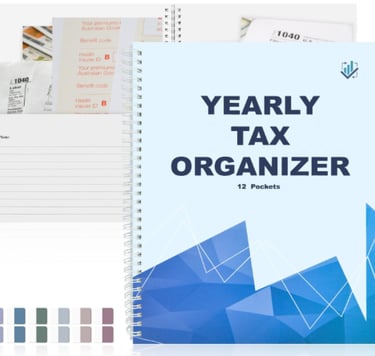
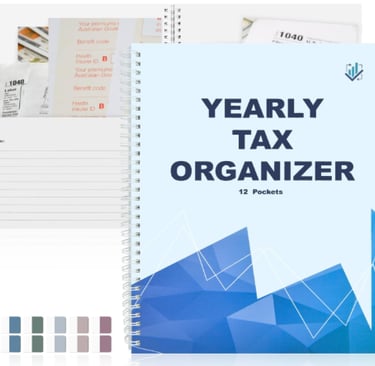
$15.99)- Letter Size Yearly Tax Organizer Book
A simple, spiral-bound organizer that keeps all your receipts, bills, and tax documents in one place. Each pocket has its own tab, so you always know where everything is when it’s time to file.
$9.99)- Sooez Accordion File Organizer
A simple expanding folder with 13 pockets to keep monthly bills, receipts, and documents sorted. Easy to carry, labeled sections, and plenty of space for tax paperwork or everyday record-keeping.


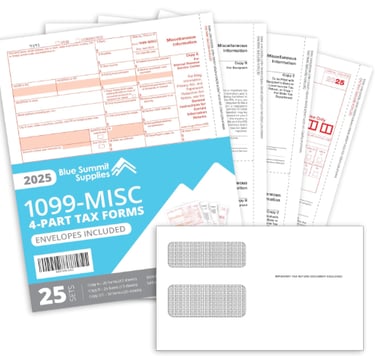
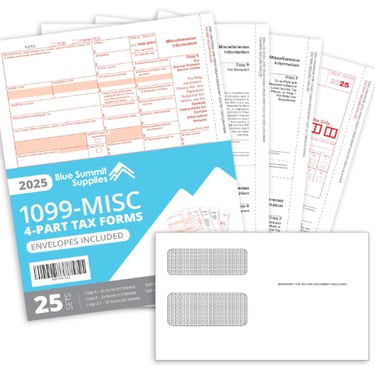
$21.99)- Blue Summit’s 1099-MISC Forms Kit
makes tax season a whole lot easier — 25 forms, matching envelopes, and smooth QuickBooks compatibility. Perfect for small businesses keeping things organized without the stress.
$7.58)- Amazon Basics Expanding Organizer File Folder
A simple, no-nonsense expanding file folder that makes organizing tax documents, receipts, and important paperwork easy.


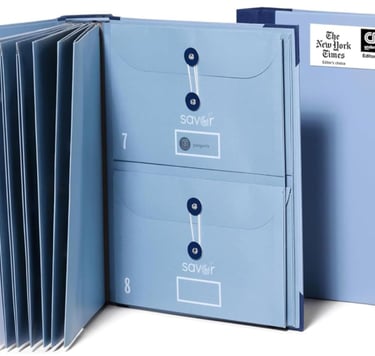
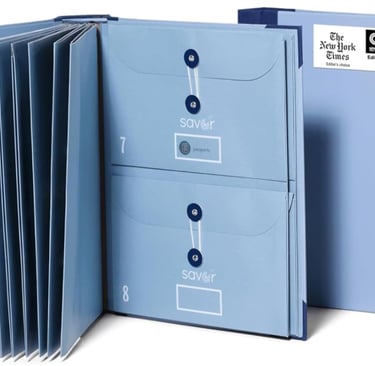
$49:99)- Savor-The Folio™ Document Organizer 2025 Edition
A thoughtfully designed document organizer made for people who like their paperwork handled with care. With acid-free, cloth-bound materials and 10 expandable pockets


$9:99)- Sooez Accordion File Organizer with Safe Zipper
A practical, everyday accordion file organizer designed for staying on top of bills, tax documents, and receipts. With 12 expandable pockets
“Quickly figure out sales tax for any amount. Enter a price and location to get accurate totals and stay prepared.”
“Real wealth is built through consistent tax awareness and preparation.”



Taxes
These strategies form part of a structured financial framework. Supporting tools are provided where appropriate to assist with implementation. Long-term stability depends on disciplined execution.


Tax Structure and Financial Stability
Tax management is a structural component of financial control.
Understanding marginal tax brackets, deduction eligibility, and tax-advantaged account rules reduces compliance risk and improves capital efficiency. Tax planning is not about emotion — it is about accuracy, timing, and alignment.
Effective tax management focuses on:
• Correct income classification
• Documented deduction support
• Strategic retirement contributions
• Accurate credit eligibility
• Withholding and estimated payment review
Clarity prevents avoidable liability.
Tax Planning Within a Financial Framework
Tax decisions influence:
• Cash flow stability
• Investment allocation
• Retirement planning
• Business income strategy
Poor planning creates unexpected liabilities. Structured oversight reduces exposure.
Taxes are operational — not optional.
Implementation
Tax efficiency should align with your broader financial structure. Supporting tools and structured resources are available to assist with documentation control, planning awareness, and compliance review.
Stability improves when tax obligations are monitored consistently rather than addressed reactively.








"The Truality Cause', the brand that is dedicated to integrity, transparency, and delivering accurate, trustworthy content to empower our users."
© 2025. All rights reserved.
"Dedicated to Helping You Build Your Financial Future". Please, feel free to subscribe to our newsletters, updates, and special offers!
2025> please be informed site was AI assisted ⚠️ Content Integrity Protected
🔒 User-Secured Validation
🔒 AI-Assisted Content Notice > Portions of this website's content have been generated or enhanced using artificial intelligence tools. While efforts are made to ensure accuracy and reliability, AI-generated content may contain errors or inaccuracies. Users are encouraged to verify information and consult professionals for advice. [TRUALITY] is committed to transparency and content integrity. Please report to us any concerns.
© 2026 MrWhy Consulting - SaaS
"An Expert In Psychology, Law & Finance!"
“My work is descriptive and analytical — focused on understanding patterns, not prescribing universal solutions.”
The Anti-Shark
“I’m here to Make you money, not take it.”
“I’m here to help, not exploit.”
"Remember to Stay Steady, Stay Real, and Stay You!"