
Analyzing how AI systems shape financial behavior, risk perception, and decision structure — and how to maintain financial stability in algorithm-driven environments.
Psychology/AI-Finance
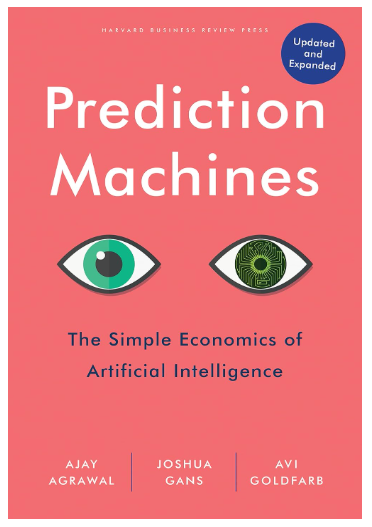
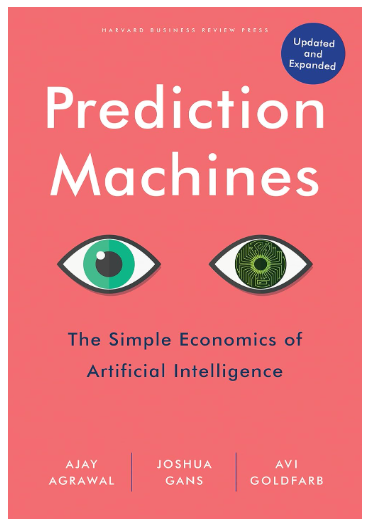
Psychology of Money — AI
If you want to understand how AI changes financial decisions, start here.
AI doesn’t change human goals — it changes how decisions are made and priced. This book explains how cheaper prediction reshapes behavior, incentives, and outcomes, helping you understand money in an AI-driven world without technical jargon.




$41.79)- Generative AI, Media, and Society – A real-world look at how AI is changing the way we create, share, and think. Perfect if you want to understand the new digital wave.




$00.99)- AI Valley – Go inside the trillion-dollar race between Microsoft and Google. See how the giants are shaping AI—and how it’s shaping us.
$18.49)- The AI Con – this one pulls back the curtain on Big Tech’s AI hype and shows how we can take control of our own digital future.


$14.83)- Hello World – Explore how algorithms quietly run our lives and what it means to stay human in an automated world. Insightful and surprisingly human.


$00.99)- Life 3.0 – A deep, fascinating dive into what happens when AI starts thinking like us… or beyond us. It’ll make you question the future in the best way.




$13.00)- Nexus – A quick, powerful history lesson on how information networks evolved from the Stone Age to AI—and what that means for our next chapter.
Affiliate Disclaimer: “As an Amazon Associate, Mr. Why may earn from qualifying purchases. Your support helps keep our financial lessons free—at no extra cost to you.”
🤖 Mr. Why’s “Psychology, AI & the Economy”: When Machines Meet Human Motivation
See how artificial intelligence influences spending, investing, and economic trends—and how human psychology still shapes the outcome.
How AI Influences Financial Decisions and Habits
Artificial intelligence is not simply improving financial tools — it is restructuring how decisions are made.
AI systems influence spending, investing, risk perception, and economic behavior at scale. These systems operate through data modeling, behavioral prediction, and automated execution. While powerful, they do not eliminate risk. They shift it.
Financial stability in an AI-driven environment depends on structure, oversight, and disciplined configuration.
01) Behavioral Pattern Analysis
AI systems analyze spending, saving, and investment patterns to generate customized recommendations.
These recommendations are only effective when behavioral discipline is present. Without structural awareness of impulse spending, mental accounting, or reactive financial habits, automation can reinforce instability instead of correcting it.
AI identifies patterns. Stability requires controlled response.
02) Automated Portfolio Management
Robo-advisors construct and rebalance portfolios based on risk tolerance and predefined objectives.
This reduces emotional interference during volatile market conditions. However, automation does not replace strategic oversight. Risk parameters, allocation logic, and rebalancing thresholds must align with long-term structural goals.
Automation increases efficiency. Stability requires governance.
03) Real-Time Alerts and Behavioral Nudging
AI-powered systems provide real-time alerts for unusual spending, missed payments, or savings deviations.
These nudges reduce operational errors and behavioral drift. When structured correctly, they reinforce discipline. When ignored, they become background noise.
Consistency — not notifications — maintains stability.
04) Fraud Detection and Security Oversight
AI continuously monitors transactional data to detect anomalies and prevent fraud.
Digital financial systems expand access but also increase exposure to structural vulnerabilities. AI enhances detection, but ultimate protection depends on account configuration, access control, and active monitoring.
Security is not automatic. It is maintained.
05) Behavioral Insight Modeling
AI tools identify recurring financial behaviors such as overspending patterns or underfunded long-term goals.
Pattern recognition allows early intervention. Without structural review, however, these insights remain passive observations.
Behavioral awareness must convert into controlled adjustment.
06) Market Signal Processing
AI systems process large-scale financial data to identify trends and pricing inefficiencies.
This reduces informational overload and limits exposure to speculative noise. However, algorithmic models operate on probability — not certainty.
Market stability requires risk containment, not prediction dependency.
07) Emotional Volatility Containment
Automation reduces impulsive decision-making driven by fear, greed, or overconfidence.
By systematizing execution rules, AI decreases reactionary behavior. Stability improves when decisions follow predefined structure rather than emotional impulse.
Discipline must be programmed — not assumed.
08) Operational Accessibility
AI-powered financial interfaces provide continuous support and automated assistance.
Increased accessibility expands participation in financial systems. However, convenience must not replace understanding. Oversight remains essential.
Ease of use does not eliminate responsibility.
Using AI Within a Stability Framework
AI is a tool. It is not a strategy.
To maintain financial stability in algorithm-driven environments:
01) Audit Data Exposure
Understand what financial data is being collected, how it is processed, and where vulnerabilities exist.
02) Align Automation With Structure
Ensure automated systems reflect defined financial priorities, risk thresholds, and liquidity requirements.
03) Conduct Regular Oversight Reviews
Review AI-generated recommendations and portfolio configurations at structured intervals.
04) Maintain Independent Judgment
Automation enhances decision-making but does not replace critical evaluation.
Stability Before Growth
AI accelerates financial processes. It does not guarantee financial stability.
Without structured oversight, automation can amplify existing weaknesses — emotional bias, misaligned risk exposure, or poor configuration.
Financial resilience in an AI-driven economy requires:
• Behavioral discipline
• System governance
• Risk containment
• Ongoing review
Assess Your AI-Driven Financial Exposure
If AI systems influence your financial decisions — directly or indirectly — stability depends on how those systems are configured and monitored.
Identify structural vulnerabilities before pursuing growth.
Run the Financial Stability Diagnostic →
Understanding Money and AI
Analyzing how artificial intelligence reshapes financial behavior, risk exposure, and economic structure — and how disciplined systems protect stability in an algorithm-driven economy


How AI Reshapes Financial Decisions and Daily Money Systems
Artificial intelligence is restructuring how financial decisions are made — at both personal and institutional levels.
By processing large-scale data, modeling behavior, and automating execution, AI influences spending, investing, compliance, security, and credit systems. These tools increase efficiency. They do not eliminate risk.
Financial stability in an AI-driven environment requires structured oversight and disciplined configuration.
01) Structured Budget Optimization
AI-powered budgeting systems analyze income, spending patterns, and recurring obligations to generate adaptive budget frameworks.
When properly configured, these systems reduce behavioral drift and improve savings consistency. Without oversight, automated suggestions can reinforce existing inefficiencies.
Automation supports structure. It does not replace it.
TrualityWallet™ (available with Truality subscription) integrates structured budgeting with stability-focused monitoring.
02) Automated Tax Structuring
AI streamlines tax preparation by analyzing financial inputs, applying current regulations, and identifying optimization opportunities.
Tax compliance is complex and error-sensitive. Automation reduces manual oversight errors but must be reviewed for alignment with long-term financial structure.
Efficiency improves outcomes. Governance prevents exposure.
03) Real-Time Anomaly Detection
AI continuously monitors transaction patterns to identify deviations from baseline financial behavior.
This adaptive monitoring improves fraud detection, reduces false alarms, and limits damage exposure. However, detection systems require user configuration and regular review.
Security is maintained — not assumed.
04) Regulatory Compliance Automation
AI systems monitor financial activities against evolving regulatory standards.
For individuals and small businesses, this reduces compliance friction and improves reporting accuracy. Stability improves when compliance is proactive rather than reactive.
Risk containment begins with structured monitoring.
05) Adaptive Financial Education Systems
AI-powered education platforms adjust learning complexity based on user progression and comprehension.
This supports structured knowledge development rather than information overload. Financial literacy, when layered progressively, reduces behavioral errors over time.
Understanding precedes stability.
06) Emotion-Sensitive Advisory Systems
Some AI systems analyze behavioral and communication signals to detect emotional volatility during financial decision-making.
By identifying stress-driven reactions, automation can reinforce pre-defined decision structures and reduce impulsive execution.
Emotional awareness strengthens discipline. Discipline strengthens stability.
07) Behavioral Cross-Selling Systems
AI-driven recommendation engines analyze usage patterns to present financial products and services.
While personalization increases relevance, poorly governed systems can amplify overspending or misaligned commitments.
Ethical configuration and transparent control mechanisms are required to protect financial structure.
08) AI-Enhanced Credit Modeling
By incorporating alternative data signals, AI expands credit assessment models beyond traditional scoring systems.
This improves accessibility but introduces privacy, bias, and fairness considerations. Stability requires careful evaluation of how personal data influences financial eligibility.
Expanded access must not compromise structural integrity.
09) Intelligent Document Processing
AI-powered document recognition extracts and verifies financial data from receipts, invoices, and contracts.
Accurate documentation strengthens audit readiness, compliance posture, and financial clarity.
Clear records support controlled financial systems.
10) Predictive Cash Flow Management
AI forecasts liquidity requirements, bill obligations, and projected shortfalls.
When configured correctly, this reduces overdraft risk, missed payments, and credit degradation.
Forecasting improves preparation. Preparation protects stability.
11) Structured Goal Monitoring and Behavioral Reinforcement
AI systems track financial progress against predefined objectives and trigger corrective nudges when deviation occurs.
Sustained progress depends on measurable structure, not motivational prompts.
Truality subscribers gain access to structured tracking tools designed to reinforce financial discipline.
Stability Before Growth
AI increases speed, automation, and predictive capacity.
It does not guarantee financial security.
Without structural oversight, automation can amplify:
• Overspending
• Misaligned credit exposure
• Compliance risk
• Emotional volatility
• Data vulnerability
Financial resilience in an AI-driven economy requires:
• Behavioral discipline
• System governance
• Risk containment
• Ongoing review
Strengthen Your Financial Structure
AI already influences your financial behavior — directly or indirectly.
The critical question is whether those systems are configured to protect stability.
Evaluate your financial automation structure and identify vulnerabilities before pursuing growth.
Access the Stability Framework →
The Psychology of Money & AI
Exploring AI's influence on financial behavior and the psychology behind our money decisions in modern economies.
"The Truality Cause', the brand that is dedicated to integrity, transparency, and delivering accurate, trustworthy content to empower our users."
© 2025. All rights reserved.
"Dedicated to Helping You Build Your Financial Future". Please, feel free to subscribe to our newsletters, updates, and special offers!
2025> please be informed site was AI assisted ⚠️ Content Integrity Protected
🔒 User-Secured Validation
🔒 AI-Assisted Content Notice > Portions of this website's content have been generated or enhanced using artificial intelligence tools. While efforts are made to ensure accuracy and reliability, AI-generated content may contain errors or inaccuracies. Users are encouraged to verify information and consult professionals for advice. [TRUALITY] is committed to transparency and content integrity. Please report to us any concerns.
© 2026 MrWhy Consulting - SaaS
"An Expert In Psychology, Law & Finance!"
“My work is descriptive and analytical — focused on understanding patterns, not prescribing universal solutions.”
The Anti-Shark
“I’m here to Make you money, not take it.”
“I’m here to help, not exploit.”
"Remember to Stay Steady, Stay Real, and Stay You!"