
Future Proofing 101
Future Proofing 101
If you’re thinking about retirement and aging, start here.
Planning ahead works best when information is centralized and easy to review. This helps you track changes over time and make adjustments before urgency forces decisions.



Retirement Planning 101
Structural Long-Term Capital Planning
Retirement planning is the structured preparation of income and capital for a period when active earnings decrease or stop.
It is not a prediction exercise.
It is a time-horizon management system.
Retirement stability depends on:
• Consistent capital allocation
• Risk-adjusted investing
• Tax-efficient account usage
• Withdrawal strategy planning
Planning begins long before retirement age.
Why Retirement Planning Matters
Time compounds capital.
Delays reduce flexibility and increase required contribution levels. Early and consistent contributions reduce long-term pressure.
Retirement planning is not about age.
It is about duration.
Core Components of Retirement Planning
1) Time Horizon
The number of years until funds are needed determines allocation strategy and risk exposure.
Longer horizons allow for greater volatility tolerance.
Shorter horizons require capital preservation focus.
2) Contribution Structure
Regular contributions build capital gradually.
Automated investing reduces behavioral interference and improves long-term consistency.
3) Risk Allocation
Investment mix should reflect:
• Income stability
• Liquidity reserves
• Tolerance for drawdowns
• Expected retirement timeline
Higher return targets require higher exposure.
Exposure must be aligned — not assumed.
4) Tax-Advantaged Accounts
Retirement planning often includes:
• 401(k) plans
• Traditional and Roth IRAs
• Employer match programs
• Self-employed retirement options
Account type affects tax timing — not investment performance itself.
Tax strategy should complement long-term capital planning.
5) Withdrawal Planning
Retirement planning does not end at accumulation.
Distribution strategy determines:
• Sustainability of capital
• Tax impact during retirement
• Exposure to sequence-of-returns risk
Planning must include both accumulation and distribution phases.
Stability Before Projection
Retirement planning should follow this order:
Establish emergency reserves
Eliminate high-interest debt
Stabilize monthly cash flow
Begin structured retirement contributions
Growth without foundation increases fragility.
Retirement Planning Is a Process
Markets fluctuate.
Life changes.
Income shifts.
Policy evolves.
A retirement plan should be reviewed periodically and adjusted as conditions change.
Consistency and structure sustain long-term outcomes.
Future Proofing 101 — How Retirement Planning Actually Works
A structural approach to long-term planning
An ethical, simple framework
Most retirement content focuses on numbers, targets, or fear of being “too late.”
This guide focuses on how retirement planning actually works in reality.
Future Proofing 101 is not about predicting the future or optimizing outcomes. It’s about understanding time horizons, uncertainty, and structural decisions—so long-term planning becomes clear, flexible, and grounded instead of stressful or rigid.
This guide treats retirement as a process, not a finish line.
What Makes This Different
Unlike most retirement planning books, Future Proofing 101:
Does not rely on forecasts or guarantees
Does not push urgency or fear-based timelines
Does not assume a single “correct” retirement path
Does not treat retirement as an age-based event
Instead, it focuses on:
Structure before projection
Flexibility before certainty
Time before optimization
Planning for change, not perfection
The goal is readiness, not prediction.
What This Guide Helps You Do
Understand what retirement planning really involves
See how time and uncertainty shape long-term outcomes
Separate planning from fear or rigid assumptions
Build systems that adapt as life changes
Think clearly about the future without pressure
No promises.
No timelines.
No false certainty.
Just a clear framework for planning ahead responsibly.
Who This Is For
This guide is for people who:
Feel confused or pressured by retirement advice
Want understanding before commitment
Prefer adaptable plans over rigid projections
Value ethics, realism, and long-term clarity
If retirement planning has felt overwhelming, abstract, or fear-driven—this guide was written to explain it calmly and honestly.
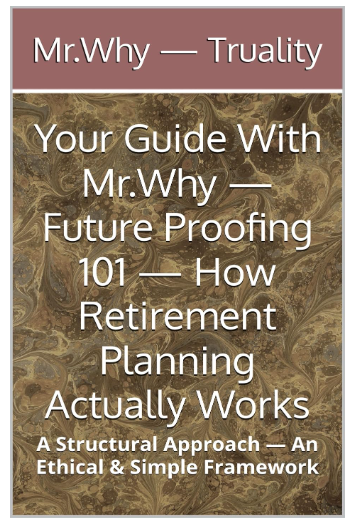
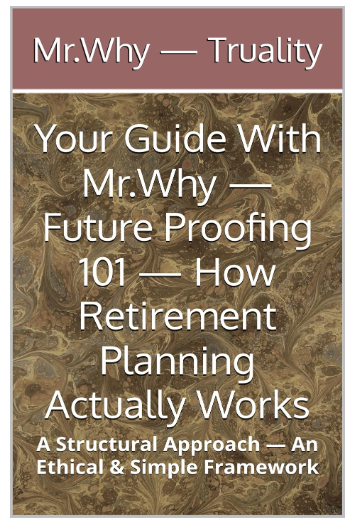
Available from Amazon/Kindle or directly from Truality.Finance by Mr.Why
Retirement Strategies (Structural Framework)
1) Evaluate Social Security Timing
Social Security benefits increase when delayed up to age 70 due to delayed retirement credits.
However, timing decisions should consider:
• Life expectancy assumptions
• Other income sources
• Tax impact
• Spousal benefit coordination
• Cash flow needs
Delaying benefits may increase monthly payouts, but it is not universally optimal. Social Security strategy should be integrated into a broader retirement income plan.
2) Sequence Withdrawals Strategically
Withdrawal order affects long-term tax exposure.
A common approach involves:
• Drawing from taxable accounts first
• Preserving tax-deferred accounts for continued growth
• Managing annual taxable income thresholds
However, withdrawal sequencing must be coordinated with tax brackets, RMD timing, and portfolio allocation — not applied automatically.
Flexibility matters.
3) Roth Conversions in Lower-Income Years
Converting traditional IRA or 401(k) funds to a Roth IRA during lower-income years may reduce long-term tax exposure.
This strategy can:
• Reduce future required minimum distributions (RMDs)
• Create tax-free income flexibility later
• Smooth lifetime tax liability
Conversions trigger immediate taxable income and should be evaluated carefully against current tax brackets and long-term projections.
4) Manage Required Minimum Distributions (RMDs)
Beginning at age 73 (under current federal rules), traditional retirement accounts require minimum annual withdrawals.
Failure to withdraw required amounts may result in IRS penalties.
Distribution planning should account for:
• Tax bracket impact
• Medicare premium thresholds
• Charitable strategies
• Portfolio rebalancing needs
RMDs are operational obligations — not optional decisions.
5) Consider Qualified Charitable Distributions (QCDs)
After age 70½, eligible individuals may donate directly from an IRA to qualified charities.
QCDs can:
• Reduce taxable income
• Count toward RMD requirements
• Support philanthropic goals
Eligibility limits and annual caps apply under IRS rules. This strategy should be reviewed in coordination with overall income planning.
Critical Corrections
We removed:
• “Comfortable and secure retirement”
• “Financial freedom and peace of mind”
• Volunteer personal stories
• Emotional reinforcement
• Overgeneralized advice
Retirement distribution strategy is technical.
Tone should reflect that.
Important Note on Accuracy
Social Security optimization is highly individual.
Delaying to age 70 is often beneficial — but not always optimal depending on health, income needs, or spousal strategy.
Precision protects credibility.
Retirement strategies:
Employer Match First: Always max out 401(k) match—it’s free money.
Tax Diversification: Balance traditional (pre-tax) and Roth (after-tax) accounts.
Catch-Up Contributions: Over 50? Extra $7,500 for 401(k), $1,000 for IRA.
Delay Social Security: Waiting past 62 increases monthly benefits.
Annuities & Income Streams: Consider for guaranteed lifetime income.
👉 Goal: build both growth (investments) and stability (guaranteed income).
“Mr. Why’s Financial Friday’s: Smart Amazon Finds for a Secure and Stress-Free Retirement”










$12.04)- “The 5 Years Before You Retire – Your Countdown to Financial Freedom! This updated guide helps you make the most of your final working years with smart saving, investing, and lifestyle strategies to retire confidently and comfortably.”
$56.99)- Fireproof Document Bag – Keep your financial papers, wills, and retirement plans safe from damage or loss.
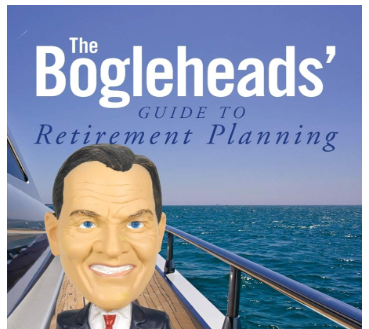
$16.59)- “The Bogleheads’ Guide to Retirement Planning – Proven, Low-Cost Strategies! Master tax-efficient investing, income planning, and long-term financial security.”
$14.87)- “The Ultimate Retirement Guide for 50+ – Suze Orman’s trusted 2025 edition helps you make smart moves, stretch your savings, and retire with confidence and peace of mind.”
$279.99)- Fujitsu ScanSnap iX1300 Compact Scanner – Digitize financial documents and organize your retirement records easily.
$19.99)- Clever Fox Retirement Planner – Map your retirement goals, savings, and milestones with clarity and motivation.
Affiliate Disclaimer: “As an Amazon Associate, Mr. Why’s Financial Fridays Retirement Planning earns from qualifying purchases. Your support helps keep our financial lessons free—at no extra cost to you.”
“Estimate how much you’ll need for retirement. Adjust savings, timeline, and returns to plan confidently.”

Retirement




These strategies form part of a structured financial system. Supporting resources are provided where appropriate to assist with implementation. Stability is built through disciplined execution over time.
Retirement Planning: Long-Term Capital Structure
Retirement planning is the structured preparation of income and assets for a period of reduced or discontinued employment.
It requires:
• Defined contribution discipline
• Risk-adjusted allocation
• Tax-aware account usage
• Long-term withdrawal planning
Avoiding reactive decisions begins with early structure.
Retirement Strategy and Financial Stability
Every retirement decision affects:
• Future income sustainability
• Tax exposure
• Liquidity flexibility
• Portfolio durability
Consistent contributions, employer match utilization, and allocation alignment form the foundation of retirement stability.
Growth is secondary to structure.
Retirement planning does not require urgency.
It requires clarity and consistency.
Begin with:
• Automated contributions
• Defined allocation targets
• Periodic review and adjustment
Time amplifies disciplined systems.




"The Truality Cause', the brand that is dedicated to integrity, transparency, and delivering accurate, trustworthy content to empower our users."
© 2025. All rights reserved.
"Dedicated to Helping You Build Your Financial Future". Please, feel free to subscribe to our newsletters, updates, and special offers!
2025> please be informed site was AI assisted ⚠️ Content Integrity Protected
🔒 User-Secured Validation
🔒 AI-Assisted Content Notice > Portions of this website's content have been generated or enhanced using artificial intelligence tools. While efforts are made to ensure accuracy and reliability, AI-generated content may contain errors or inaccuracies. Users are encouraged to verify information and consult professionals for advice. [TRUALITY] is committed to transparency and content integrity. Please report to us any concerns.
© 2026 MrWhy Consulting - SaaS
"An Expert In Psychology, Law & Finance!"
“My work is descriptive and analytical — focused on understanding patterns, not prescribing universal solutions.”
The Anti-Shark
“I’m here to Make you money, not take it.”
“I’m here to help, not exploit.”
"Remember to Stay Steady, Stay Real, and Stay You!"